 Debrecen4U
April 30, 2026
Debrecen4U
April 30, 2026
Debrecen Jewish Quarter’s Artist Colony Opens for Fourth Time
This time, the creative work involved Réka Démuth, Zsolt Durucskó, Zoltán Fátyol, Johanna Kovács, F. László Mikó, Zsuzsa Szász, István Tamus, Sándor Uzsák and Bea Zoltai.
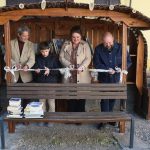
The works created at the Jewish Quarter’s artist colony over the course of a week can now be seen by the Debrecen public: the closing exhibition of the colony was opened on 29 April by István Puskás, Deputy Mayor for Culture. He recalled that the exhibition is hosted in a historic building that confronts visitors with the past. The Deputy Mayor spoke about the active community operating here, and also noted that within this sacred and communal space, not only the past and present, but also the future is present. He highlighted the high level of creative work taking place, emphasising that the works created here also enrich the heritage of the Jewish cultural quarter and of Debrecen itself. He also pointed out the importance of the exhibition being seen by many during the upcoming Art Week in May, which will once again feature a rich programme focused on the local visual arts scene.
Zsolt Heller, Vice President of the Jewish Community, conveyed the greetings of President Tamás Horovitz to the audience and the artists, as he was unable to attend the opening in person. He highlighted the importance of the intensive dialogue that began a few years ago, which has laid the foundations for numerous high-quality cultural events in the Jewish quarter, a place where anyone can enter and take part in these occasions. He compared the synagogue and its surroundings—this sacred and in some respects enclosed space—to a “grund”, offering significant value to visitors.
The exhibited works, as well as the installation work by artists Zoltán Fátyol and István Tamus, were then evaluated by Eszter Láng, curator of the artist colony. She noted that what is visible in the exhibition is only a fraction of the works created over just a few days. Láng Eszter also spoke about the background and creative processes, emphasising that invited artists are expected to be both highly skilled and authentically expressive. She expressed hope that one day there may be a dedicated exhibition space where a permanent display of works from the Jewish artist colonies could be established.
Source and photo credit: debrecen.hu